

Capturing ideas
An idea is a Feature with a clear goal, grouped under the Epic it supports. Start it in the first Proposed state for Features. In the default workflow, that state is New. If your project uses different state names, choose its equivalent first Proposed state.
Search before you add one
Section titled “Search before you add one”Look for an existing Feature before you capture the idea. In the app, review the Features backlog and use its filters to narrow the list when useful. With an agent, ask it to search for the idea first. Its search matches words and meaning in item titles, descriptions, comments, and attachments.
If a Feature already covers the idea, continue on that item. Avoid creating another record just because the wording is different.
Create a Feature in the app
Section titled “Create a Feature in the app”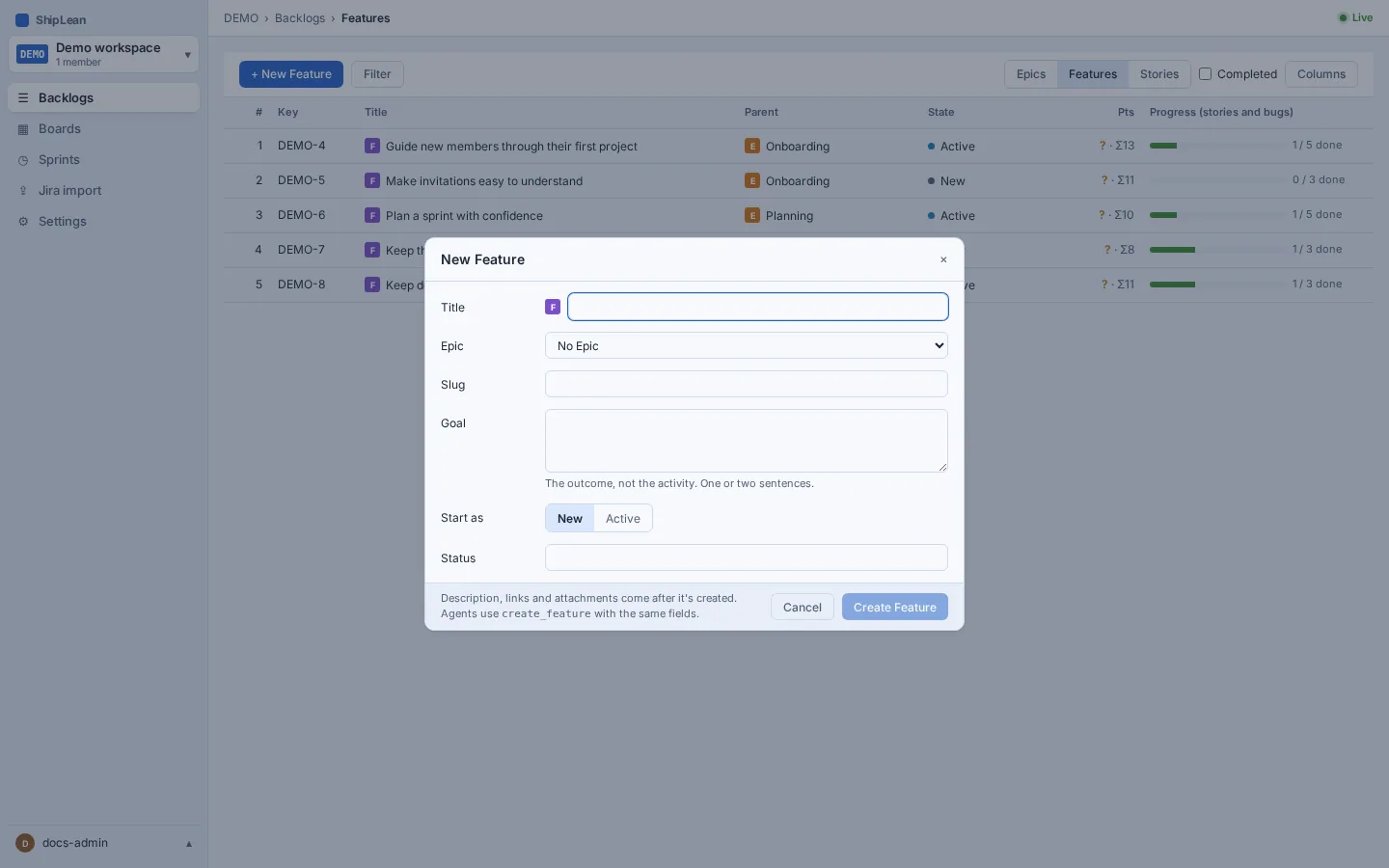
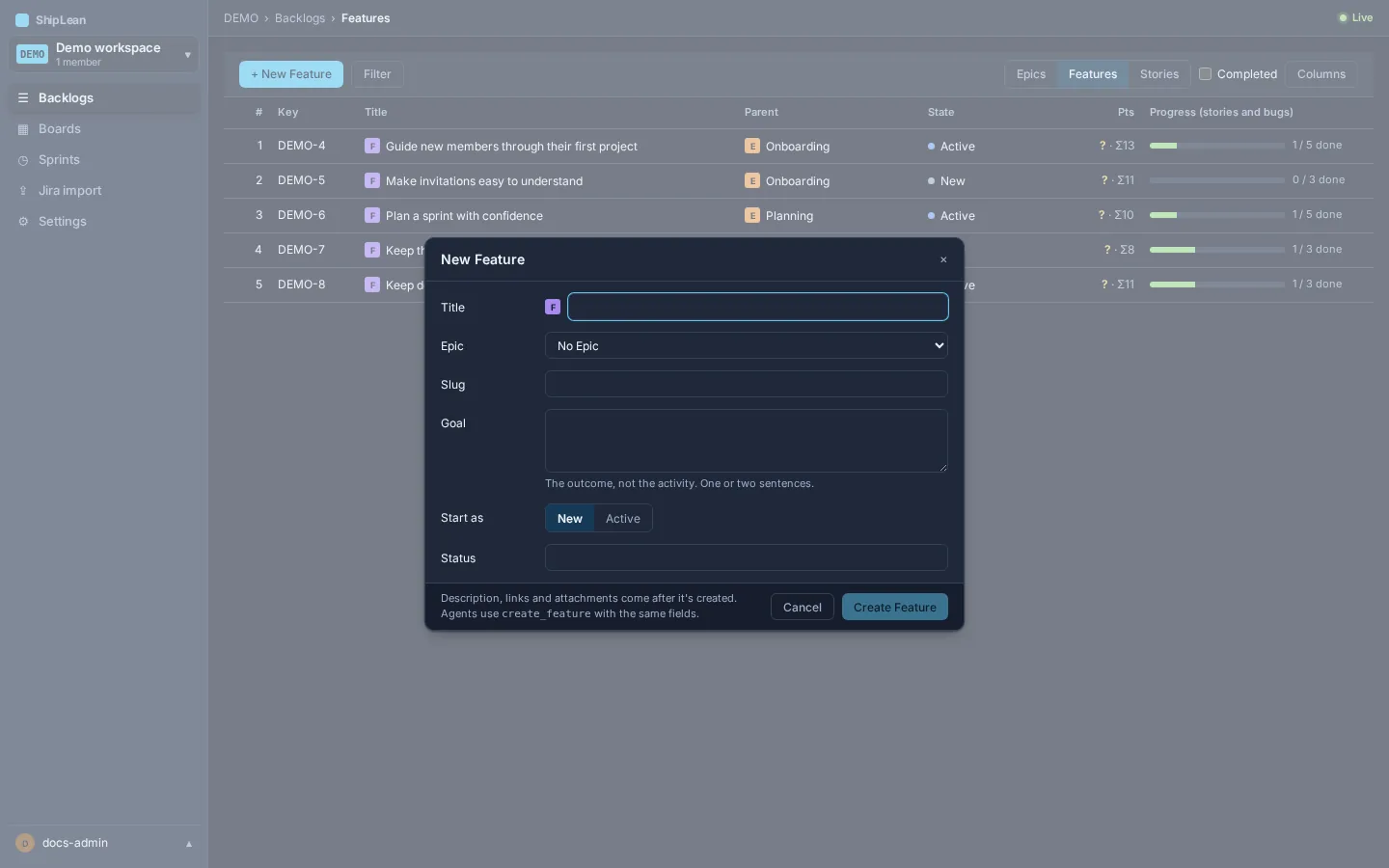
Open the Features backlog and choose New Feature. Enter a short title, select its Epic, and write the goal as an outcome. Leave Start as set to the first Proposed state, which is New by default. You can also set a status line. After you create the Feature, ShipLean opens it so you can add the description, links, and attachments.
For the running example, the Epic is Onboarding and the Feature is Guide new members through their first project. Its goal is to help a new member create a project and find their next action.
Capture an idea with an agent
Section titled “Capture an idea with an agent”Tell your connected agent what the idea is, and ask it to search before creating a Feature. The prompt below is an example, not a recorded session:
Search for existing work about helping new members start a project. If there is no matching Feature, capture “Guide new members through their first project” under the Onboarding Epic, with the goal of helping a new member create a project and find their next action. Leave it in the first Proposed state.
The agent should reuse a matching Feature if it finds one. If it creates a Feature, the record stays in ShipLean and is available to you in the backlog.
Keep the working context on the Feature
Section titled “Keep the working context on the Feature”Use the Feature’s goal field for the outcome. In the body, keep short Markdown sections for key facts and decisions, the next step, and open questions. Attach longer research as separate files, and link useful sources. Update the body as your understanding changes, so the next person can tell what is known and what still needs attention.
See researching an idea and the full flow.